BAC Calculator, How Blood Alcohol Level Really Works
Estimate your blood alcohol concentration from body weight, sex, drink amount, and time since your first drink.
Your BAC estimate
This calculator provides an estimate based on general formulas. Actual Blood Alcohol Concentration may vary. Never rely on this tool for safety or legal decisions.”
Alcohol affects the body faster than most people expect. A bac calculator helps estimate how much alcohol is in your bloodstream at any moment. It uses factors like body weight, drinks consumed, and time since drinking began.
This guide explains how blood alcohol concentration works in simple terms. You will learn how alcohol spreads in the body, how levels rise, and how they drop over time. It also helps you understand what different BAC levels actually mean in real situations.
Knowing your BAC is not about guessing. It is about understanding how alcohol impacts judgment, coordination, and safety.
What is BAC and why it matters in real situations
Blood alcohol concentration, often called BAC, measures alcohol in your blood. It is usually shown as a percentage value.
A higher percentage means more alcohol is affecting your body.
Why it matters:
- It directly affects reaction time and decision making
- It changes coordination and balance
- It increases the risk of accidents and poor judgment
- It determines legal driving limits in many countries
Even a small increase in BAC can change how you feel and act. At higher levels, the risks increase quickly. BAC is not just a number. It reflects how your body is handling alcohol at that moment.
How BAC is calculated step by step
BAC is not random. It follows a clear calculation based on a few inputs. Most tools use the Widmark formula. It estimates alcohol concentration using body data and time.
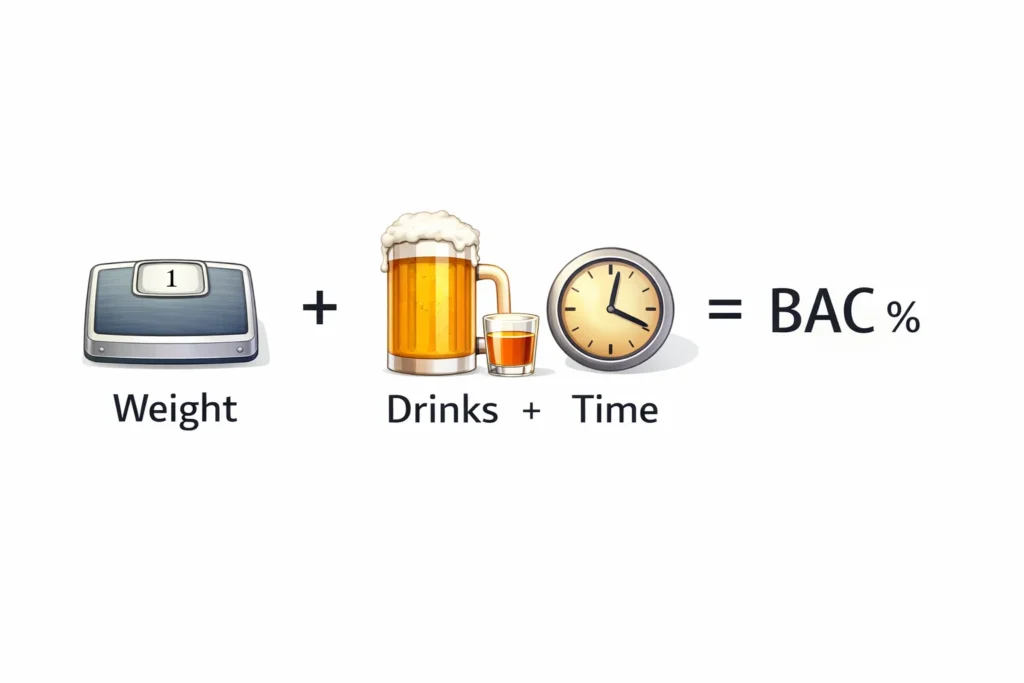
Key elements in the calculation:
- Total alcohol consumed, converted into standard drinks
- Body weight, which affects dilution of alcohol
- Gender, which changes body water ratio
- Time since drinking began, which affects alcohol breakdown
Here is how it works in simple terms:
- Alcohol enters the bloodstream after drinking
- It spreads through body water
- The body slowly removes alcohol over time
- The remaining amount determines the current BAC level
Important points to understand:
- Alcohol does not leave the body instantly
- The elimination rate is steady, around 0.015 per hour
- Drinking more increases both peak level and total duration
This is why two people can drink the same amount and get different results.
Standard drinks with real examples
Not all drinks are equal. That is why standard drinks are used. A standard drink contains about 14 grams of pure alcohol. Different beverages can have the same alcohol content even if sizes differ.
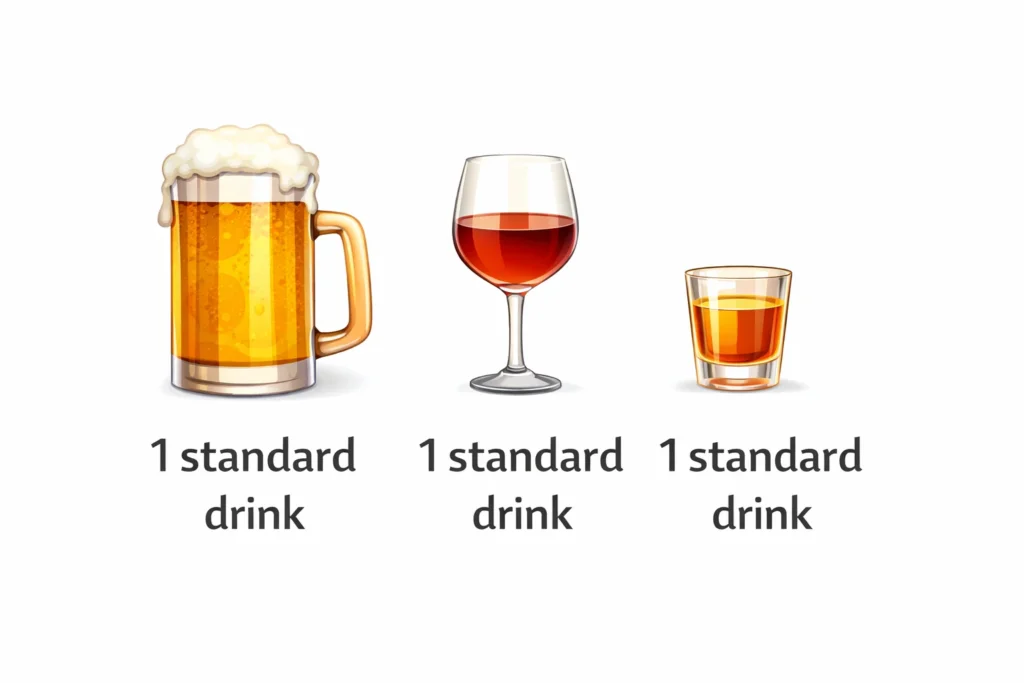
Common examples:
- Beer, 12 oz at 5 percent equals one standard drink
- Wine, 5 oz at 12 percent equals one standard drink
- Spirits, 1.5 oz at 40 percent equals one standard drink
Stronger drinks change the calculation:
- Strong beer can equal more than one standard drink
- Cocktails often contain multiple servings of alcohol
- Large glasses or bottles increase total intake quickly
Why this matters:
- Counting drinks without standardizing leads to wrong estimates
- Many people underestimate how much alcohol they consumed
- Accurate drink conversion improves BAC estimation
Always think in standard drinks, not just number of glasses.
Standard drinks explained with real examples
Not all drinks are equal. That is why standard drinks are used.
A standard drink contains about 14 grams of pure alcohol.
Different beverages can have the same alcohol content even if sizes differ.
Common examples:
- Beer, 12 oz at 5 percent equals one standard drink
- Wine, 5 oz at 12 percent equals one standard drink
- Spirits, 1.5 oz at 40 percent equals one standard drink
Stronger drinks change the calculation:
- Strong beer can equal more than one standard drink
- Cocktails often contain multiple servings of alcohol
- Large glasses or bottles increase total intake quickly
Why this matters:
- Counting drinks without standardizing leads to wrong estimates
- Many people underestimate how much alcohol they consumed
- Accurate drink conversion improves BAC estimation
Always think in standard drinks, not just number of glasses.
Factors that affect your Blood Alcohol Concentration level the most
BAC is not the same for everyone. Several factors change how alcohol behaves in the body.
These variables can increase or decrease your estimated level.
Main factors to consider:
- Body weight
Heavier bodies dilute alcohol more, leading to lower BAC levels - Gender
Females usually have less body water, so BAC can be higher - Drinking speed
Faster drinking raises BAC quickly before the body can process alcohol - Food intake
Eating slows alcohol absorption into the bloodstream - Metabolism rate
Some people process alcohol slightly faster than others
Other small influences:
- Hydration level
- Type of drink
- Overall health
Key takeaway:
- Two people drinking the same amount can have very different BAC levels
- Time and body composition matter just as much as alcohol consumed
Legal BAC limits and driving risks
Most countries set legal limits based on BAC levels. These limits define when a person is considered impaired while driving.
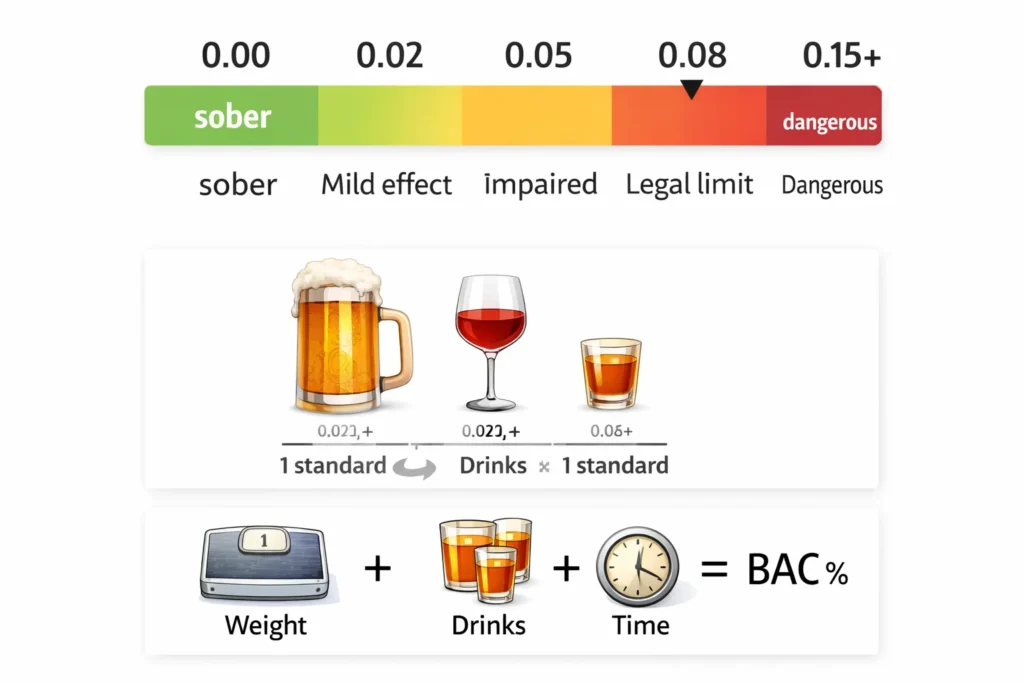
Common legal standards:
- 0.08 percent is the typical limit for regular drivers
- 0.05 percent or lower is used in some countries
- 0.00 to 0.02 percent applies to new or young drivers in many regions
Important points:
- Legal limits do not mean safe driving
- Impairment can start below the legal threshold
- Reaction time and decision making drop before reaching 0.08
Risks involved:
- Increased chance of accidents
- Poor judgment in critical situations
- Slower response to unexpected events
Law enforcement often uses breath tests to estimate alcohol levels quickly. Penalties can include fines, license suspension, or legal charges. Understanding these limits helps reduce risk, but it should not replace safe choices.
How long alcohol stays in your system
Alcohol stays in your system longer than most people think. Your body removes it slowly at a steady rate.
On average:
- The body clears about 0.015 BAC per hour
- This rate does not change much between people
What affects total time:
- Higher BAC means longer time to reach zero
- More drinks increase total alcohol in the body
- Faster drinking raises peak levels quickly
Common misunderstandings:
- Coffee does not speed up alcohol removal
- Cold showers do not lower BAC
- Sleeping does not remove alcohol faster
Your body still processes alcohol at the same pace.
Example idea:
- If your BAC is 0.10, it may take around 6 to 7 hours to return to zero
- If your BAC is higher, the time increases further
This is why planning ahead is important when drinking.
How long does it take to get below 0.08 percent
Dropping below 0.08 percent depends on your current alcohol level.
The body reduces BAC at a steady pace over time.
Key idea:
- If your BAC is above 0.08, you need time to reach a safer level
- The higher your BAC, the longer it takes
Simple way to understand:
- Take your current BAC
- Subtract 0.08
- Divide the result by 0.015 per hour
What affects this time:
- Total drinks consumed
- Body weight and gender
- Time already passed since drinking began
Examples:
- A BAC of 0.12 may take about 2 to 3 hours to drop below 0.08
- A BAC of 0.16 may take much longer
Important reminder:
- Being below 0.08 does not mean you are fully sober
- Impairment can still exist at lower levels
Time helps reduce alcohol in the body, but it does not remove risk instantly.
Common mistakes when estimating BAC
Many people miscalculate their alcohol level without realizing it.
These mistakes lead to wrong assumptions about safety and impairment.
Common errors:
- Ignoring drink strength
Not all drinks have the same alcohol content - Counting glasses instead of standard drinks
Large pours can equal multiple standard drinks - Forgetting time factor
BAC changes every hour after drinking starts - Assuming food cancels alcohol
Food slows absorption but does not reduce total alcohol - Believing tolerance lowers BAC
Tolerance changes feeling, not actual blood alcohol level - Underestimating total drinks
Mixing different drinks can increase intake quickly
Why this matters:
- Small miscalculations can lead to big differences in BAC
- Wrong estimates increase risk, especially with driving
Accurate inputs lead to better understanding of your alcohol level.
Are BAC calculators accurate and reliable
BAC tools give an estimate based on known formulas and inputs. They are useful, but not exact for every person.
What makes them reliable:
- They use standard formulas like Widmark
- They account for weight, drinks, and time
- They follow average alcohol elimination rates
What limits accuracy:
- Individual metabolism can vary
- Food intake is estimated, not exact
- Drink sizes may be miscounted
- Body composition differences are not fully captured
Key points to remember:
- Results are approximate, not precise measurements
- They do not replace breath or blood tests
- They are best used for awareness, not decision making
A bac calculator helps you understand trends, not exact numbers.
BAC timeline, peak level and decline
BAC does not stay constant after drinking. It follows a clear pattern over time. Understanding this timeline helps explain why alcohol feels stronger later.
Typical BAC timeline:
- Absorption phase
Alcohol enters the bloodstream after each drink - Rising phase
BAC increases as more alcohol is consumed - Peak level
Highest BAC usually occurs within 30 to 90 minutes - Elimination phase
The body starts reducing alcohol at a steady rate
What affects the peak:
- Speed of drinking
- Food intake
- Strength of alcohol
Important insights:
- BAC can still rise even after you stop drinking
- Peak level is often higher than expected
- Decline is slower than the rise
This is why people may feel more impaired later than they expect.
How to reduce risks when drinking alcohol
Reducing risk starts with simple, practical choices.
Small actions can lower the impact of alcohol on your body.
Helpful habits:
- Drink slowly
Give your body time to process each drink - Alternate with water
Helps with hydration and reduces overall intake - Eat before and during drinking
Slows alcohol absorption into the bloodstream - Avoid mixing strong drinks quickly
High alcohol content raises BAC faster - Set a limit in advance
Helps control total alcohol consumption - Plan your return home early
Avoid last minute risky decisions
What to avoid:
- Drinking on an empty stomach
- Competing or rapid drinking
- Relying on myths like coffee or cold showers
Safer choices reduce the chance of reaching high BAC levels.
When BAC becomes dangerous or life threatening
Very high BAC levels can become dangerous quickly. At extreme levels, alcohol can affect breathing and basic body functions.
Warning signs to watch:
- Confusion or inability to stay awake
- Repeated vomiting
- Slow or irregular breathing
- Loss of coordination or collapse
- Unconsciousness or inability to respond
High risk levels:
- Around 0.20 percent, serious impairment begins
- Above 0.30 percent, risk of unconsciousness increases
- At very high levels, alcohol poisoning can occur
Important actions:
- Do not leave the person alone
- Place them on their side to prevent choking
- Call for medical help if symptoms are severe
Why this matters:
- Alcohol continues affecting the body even after drinking stops
- Delayed help can lead to serious harm
Recognizing early signs can prevent life threatening situations.
How to use the BAC calculator correctly
Using a bac calculator properly gives more useful estimates.
Small input mistakes can change results significantly.
Follow these steps:
- Enter your correct body weight and choose the right unit
- Select your drink type or use standard drink values
- Add the total number of drinks consumed
- Enter hours since your first drink began
- Choose food condition if available
Best practices:
- Count drinks honestly, not roughly
- Include all drinks, even small ones
- Do not ignore time gaps between drinks
What you will see in results:
- Estimated BAC percentage
- Time to reach 0.08 percent
- Time to reach 0.000 percent
- A general impairment level
Remember:
- Results are estimates based on average values
- They help with awareness, not exact measurement
Use the tool as a guide, not a decision maker.
Final thoughts on understanding your alcohol level
Understanding BAC helps you make safer choices around alcohol. It shows how drinking affects your body over time.
Key reminders:
- BAC rises faster than most people expect
- It drops slowly at a steady rate
- Effects begin even at low levels
- Legal limits do not always mean safe
A bac calculator is useful for awareness and planning. It helps estimate alcohol levels and recovery time. Still, it should never replace judgment or safety decisions. The safest approach is always to avoid risky situations after drinking.