
Asphalt Calculator, Estimate Asphalt Tons for Any Area
Estimate asphalt volume, tons, and optional material cost for a paving area.
You can explore more tools like this on our construction calculator collection to plan your project better.
An asphalt calculator helps you estimate how much material your project needs. It uses area, thickness, and density to give a quick result. This saves time before ordering asphalt for driveways, parking lots, or small roads.
You do not need complex math or engineering knowledge here. Just enter simple values like length, width, or total area. The tool converts everything into volume and then into tons.
This is useful for homeowners, contractors, and anyone planning paving work. It reduces guesswork and helps you avoid costly mistakes.
- Plan material needs before starting work
- Avoid over-ordering or running short during paving
- Get clear estimates using standard density values
The goal is simple. You measure your surface, choose thickness, and get an estimate in tons. That is all you need for basic planning.
What this asphalt calculator helps you find
This asphalt calculator gives a quick estimate of required asphalt tons. It focuses only on material quantity, not cost or labor details.
You enter area and thickness, then the tool calculates volume and weight. The result helps you understand how much asphalt you need before ordering.
This is helpful when planning small or large paving work. It keeps the process simple and easy to follow.
- Estimate asphalt tons based on your project size
- Convert area and thickness into usable volume values
- Understand how density affects final material weight
The output is clear and easy to scan. You see area, volume, and total tons in one place.
When you need an asphalt calculator
You need an asphalt calculator when planning any paving project. It helps you estimate material before ordering or starting work.
This is useful for both small and large surfaces. You can quickly check how much asphalt is required.
Common situations include:
- Installing a new driveway for a house or garage
- Paving a parking lot for shops or offices
- Repairing or resurfacing an existing asphalt surface
- Planning a road, pathway, or private access lane
It also helps when comparing different thickness options. A small change in thickness can increase total tons quickly.
Using this early in planning avoids delays later. You know how much material is needed before contacting suppliers.
Basic inputs used in asphalt calculation
Every asphalt estimate depends on a few simple inputs. These values define the final volume and total weight.
You only need three main things to get a reliable result.
- Area
This is the total surface you want to pave. It can be length and width, or direct square footage. - Thickness
This shows how deep the asphalt layer will be. It is usually entered in inches or centimeters. - Density
This converts volume into weight. Standard asphalt density is commonly used for quick estimates.
Each input plays an important role in the final result.
- Larger area increases total asphalt required
- Greater thickness increases volume and tons
- Higher density slightly increases final weight
Keeping these inputs accurate ensures better planning. Small mistakes in measurement can lead to large differences in total tons.
Area calculation for asphalt projects
Area is the starting point for every estimate. You need the total surface size before calculating volume or tons. Most projects use simple shapes, so the process stays easy.
Rectangle area method
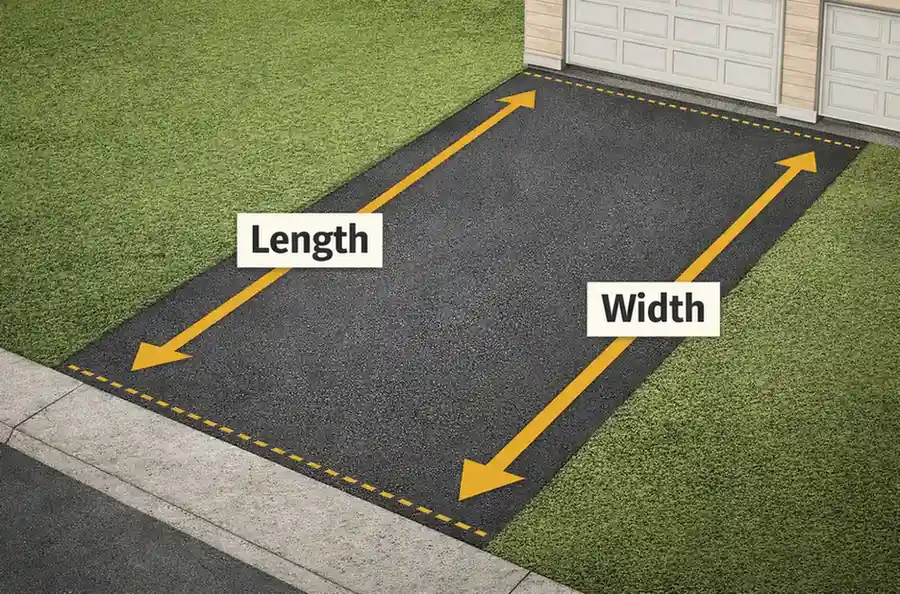
This is the most common way to measure a surface.
- Measure the length of the area
- Measure the width of the area
- Multiply both values to get total area
Example:
- 40 ft × 12 ft = 480 sq ft
This method works for driveways, parking spaces, and straight paths.
Direct area option
Sometimes the total area is already known. In that case, you can skip length and width.
- Enter square feet or square meters directly
- Useful for pre-measured or irregular surfaces
For complex shapes:
- Break the area into smaller rectangles
- Calculate each section separately
- Add all values to get total area
Accurate area measurement leads to better asphalt estimates. Even small errors can affect final tonnage.
Thickness and its impact on asphalt quantity
Thickness directly affects how much asphalt you need. A small change in depth can increase total volume quickly.
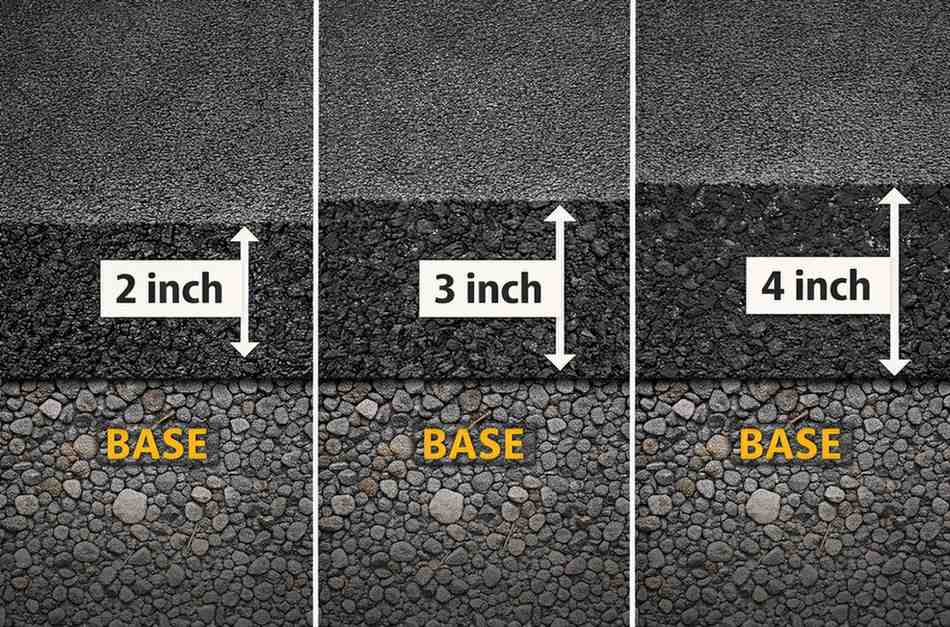
It is usually entered in inches or centimeters. The value must match your project type and expected load.
- Thin layers use less material but may wear out faster
- Thicker layers increase strength but require more asphalt tons
Common thickness ranges:
- Driveways, around 2 to 3 inches
- Parking areas, around 3 to 4 inches
- Light roads or heavy use surfaces, even thicker layers
Before calculation, thickness must be converted into the same unit system. For example:
- Inches should be converted into feet for volume calculation
- Centimeters should be aligned with metric units
Choosing the right thickness is important for durability. It also helps avoid underestimating or overestimating material.
Density and why it matters in tonnage calculation
Density converts asphalt volume into weight. Without it, you only get cubic values, not tons.
Most estimates use a standard density value. This keeps calculations simple and practical.
- Common value, about 145 lb per cubic foot
- Metric users may see values around 2300 to 2400 kg per cubic meter
Density can change slightly based on asphalt mix and compaction.
- Hot mix asphalt may vary depending on aggregates used
- Compacted layers are denser than loose material
Using a standard value works for most projects. It gives a close estimate for planning and ordering.
If density is set too low or too high, results will shift.
- Lower density gives fewer tons
- Higher density increases total weight
For basic use, stick with the default value. Adjust only if you have specific mix data.
Simple formula behind asphalt calculation
The calculation process is straightforward when units are consistent. You convert area and thickness into volume, then convert volume into tons.
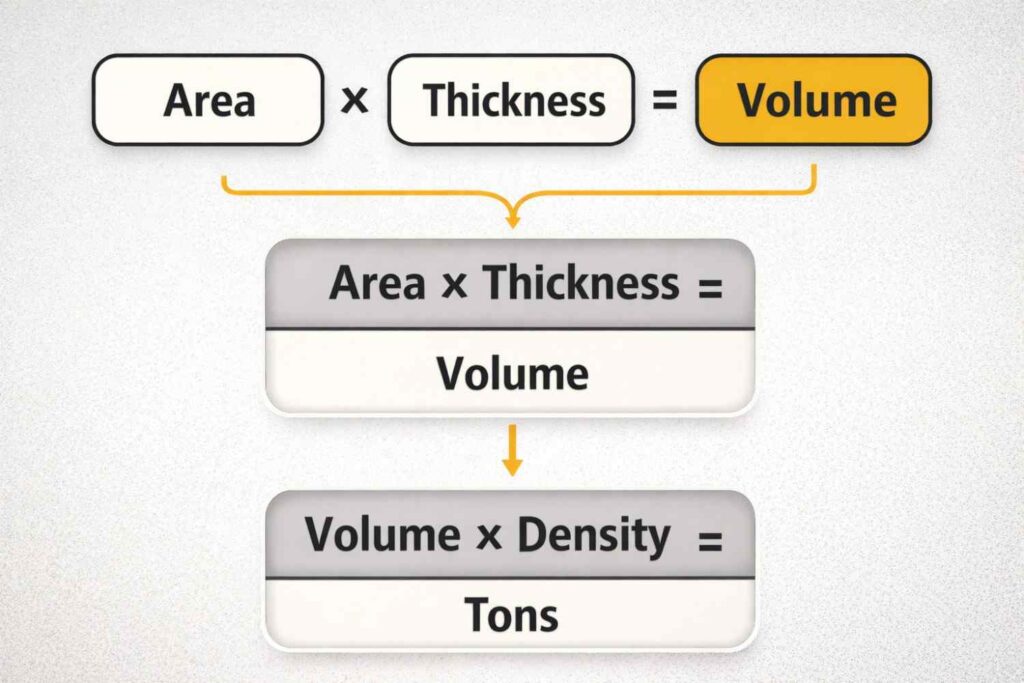
Start with volume:
- Volume = Area × Thickness
Make sure thickness is in the same unit system as area. For example, inches must be converted into feet.
Then convert volume into weight:
- Weight = Volume × Density
Finally, convert pounds into tons:
- Tons = Weight ÷ 2000
This step-by-step method gives a reliable estimate for most paving projects.
Keep these points in mind:
- Always convert units before applying the formula
- Use a standard density value for general estimates
- Double-check measurements before calculating
These small steps help avoid large errors in total asphalt required.
Units used in asphalt calculations
Units must stay consistent from start to finish. Mixing units leads to wrong results.
Most projects use either imperial or metric systems. Choose one and stick with it.
Common units include:
- Length, feet or meters
- Thickness, inches or centimeters
- Area, square feet or square meters
- Volume, cubic feet or cubic meters
- Weight, pounds or tons
Each value connects with the next step in calculation.
- Length and width create total area
- Thickness turns area into volume
- Density converts volume into weight
If one unit is incorrect, the final tons will also be incorrect.
For better accuracy:
- Use the same system for all inputs
- Convert values before calculating if needed
- Avoid mixing feet with meters in the same calculation
Clear unit handling makes the result more reliable and easier to trust.
Unit conversion basics for better accuracy
Unit conversion keeps your calculation accurate. Small mistakes here can change final tons a lot.
You often need to convert thickness before calculating volume. Area and thickness must match the same system.
Common conversions used in paving:
- Inches to feet, divide by 12
- Centimeters to meters, divide by 100
- Square meters to square feet, multiply by 10.764
- Cubic meters to cubic feet, multiply by 35.315
These conversions help align all values before applying the formula.
Example:
- 3 inches thickness becomes 0.25 feet
- 100 m² area becomes about 1076 sq ft
Keeping conversions correct ensures your volume and tonnage stay accurate.
Always check units before calculating. This step prevents major errors in asphalt estimates.
Asphalt calculator for driveway projects
A driveway is one of the most common use cases. This asphalt calculator helps estimate material for residential paving.
Driveways usually have simple shapes, so area measurement is easy.
- Measure length and width of the driveway
- Multiply both values to get total area
- Choose thickness based on expected vehicle load
Typical driveway setup:
- Standard cars, around 2 to 3 inches thickness
- Heavier vehicles, slightly thicker layers for durability
After entering these values, the tool converts them into volume and tons. This gives a clear idea of how much asphalt you need.
Good planning helps avoid problems during installation.
- Too little asphalt can delay the project
- Too much asphalt increases unnecessary cost
Using correct measurements ensures better results for driveway paving.
Asphalt vs blacktop, understanding the same material
Asphalt and blacktop are often used to describe the same paving material. In most cases, there is no real difference in how they are used.
- Both are asphalt concrete used for paving surfaces
- Both contain aggregates mixed with bitumen binder
- Both are used for driveways, parking areas, and roads
The difference is mostly in naming, not in function.
For your project, the calculation stays the same. Whether you call it asphalt or blacktop, the required tons depend on area, thickness, and density.
Common use cases for asphalt estimation
Asphalt is used in many types of paving work. Each use case may require slightly different thickness and planning.
This helps you adjust inputs based on how the surface will be used.
Common applications include:
- Driveways
Used for homes and small buildings with regular vehicle traffic - Parking lots
Designed for multiple vehicles and moderate daily use - Roads and access paths
Used for light to heavy traffic depending on location - Walkways and small surfaces
Used for pedestrian areas or low-load spaces
Each use case affects how much asphalt is needed.
- Heavier traffic needs more thickness
- Larger areas increase total volume quickly
- Surface conditions may also impact final estimates
Before calculating, think about how the area will be used. This helps you choose the right thickness and avoid underestimating material.
Mistakes people make when calculating asphalt
Small mistakes can lead to big differences in total asphalt needed. It is easy to miscalculate if units or inputs are not clear.
These are the most common issues:
- Mixing units
Using feet for area and inches without proper conversion - Incorrect thickness input
Entering inches but forgetting to convert into feet - Wrong density value
Using unrealistic numbers instead of standard asphalt density - Ignoring compaction
Ordering exact calculated tons without extra margin - Measurement errors
Rough estimates instead of accurate length and width values
These mistakes can cause problems during the project.
- Underestimation can delay work
- Overestimation leads to wasted material
To avoid this:
- Double-check all inputs before calculating
- Keep units consistent from start to finish
- Use standard values unless specific data is available
Accurate inputs give more reliable asphalt estimates.
Compaction and real world asphalt adjustments
Asphalt does not stay at the same thickness after installation. It compacts during rolling and settling.
This affects how much material you should order.
- Fresh asphalt is slightly thicker before compaction
- After rolling, the layer becomes denser and thinner
- Final thickness is lower than the loose applied layer
Because of this, contractors usually add extra material.
- A small margin helps cover compaction loss
- It also prevents shortages during paving work
Typical adjustment approach:
- Add a small percentage above calculated tons
- This depends on project size and surface conditions
Other factors that can affect results:
- Base preparation and ground condition
- Type of asphalt mix used
- Weather during installation
The calculation gives a solid estimate. Real world conditions may slightly change the final amount needed.
How to estimate asphalt for irregular areas
Not every surface is a perfect rectangle. Many projects have curves or uneven shapes.
You can still estimate asphalt easily by breaking the area into simple parts.
- Divide the surface into smaller rectangles or squares
- Measure each section separately
- Calculate area for each part
- Add all areas to get the total surface
This method works well for:
- L-shaped driveways
- Curved parking areas
- Mixed or extended paving surfaces
If the total area is already measured, you can enter it directly. This saves time and avoids repeated calculations.
For better accuracy:
- Use consistent units for all measurements
- Round values carefully, not roughly
- Double-check total area before calculating tons
A clear area estimate leads to a more reliable asphalt quantity.
Asphalt coverage and project planning tips
Coverage depends on both thickness and density. A thicker layer needs more asphalt for the same area.
This helps you plan material before starting work.
- Thin layers cover more area but wear out faster
- Thicker layers improve strength and last longer
- Higher density slightly increases total tons required
Planning tips to follow:
- Measure the full area before calculating
- Choose thickness based on traffic and usage
- Keep a small margin for adjustments during paving
You should also consider the base layer condition.
- A stable base supports even asphalt distribution
- Poor base may require more material in some sections
Clear planning helps avoid delays and material shortages.
Choosing the right thickness for your project
Thickness depends on how the surface will be used. It affects both durability and total material needed.
Choosing the right depth helps balance strength and material use.
Common guidelines:
- Light use areas
Around 2 inches works for walkways or very light traffic - Residential driveways
Around 2 to 3 inches handles regular vehicle use - Parking areas
Around 3 to 4 inches supports more frequent use - Heavier load surfaces
Thicker layers are needed for trucks or constant traffic
Other factors also matter:
- Soil condition under the surface
- Quality of the base layer
- Weather and temperature changes
A thicker layer increases durability but also increases total asphalt required. A thinner layer saves material but may reduce lifespan.
Choose thickness based on actual use, not guesswork.
Why accurate asphalt estimation saves money
Accurate estimates help you control your project budget. Small errors can increase total cost quickly.
Ordering the right amount of asphalt avoids waste and delays.
- Overestimating leads to unused material and extra expense
- Underestimating can stop work and require another order
- Delivery costs may increase with multiple trips
Good estimation also improves planning.
- You can schedule work without interruptions
- Material arrives in the right quantity at the right time
- Contractors can complete the job more efficiently
It also helps with resource management.
- Less material waste means better cost control
- Proper planning reduces last-minute changes
Accurate values make the entire paving process smoother and more predictable.
Quick checklist before calculating asphalt
Before using the asphalt calculator, take a moment to check your inputs. This helps avoid errors in the final result.
Follow this simple checklist:
- Measure length and width carefully using the same unit system
- Confirm total area if using direct input method
- Choose thickness based on actual surface usage
- Convert thickness into correct units before calculation
- Use standard density unless you have specific mix data
- Recheck all values before calculating final tons
These steps keep your estimate accurate and reliable.
Even small mistakes in measurement or units can change the result. A quick check ensures better planning and smoother execution.
Frequently asked questions
Final note on asphalt calculation accuracy
This asphalt calculator gives a clear estimate for planning your project. It helps you understand how much material is needed before ordering.
Results are based on standard values and proper inputs. Real conditions like compaction or base quality may slightly change the final amount.
Always double-check measurements and units before calculating. This ensures better accuracy and smoother project execution.