

Brick Calculator, How to Calculate Bricks for Any Wall
Estimate how many bricks you need for a wall, with optional waste allowance.
Estimated brick quantity
0 bricks
Wall area
0
Base bricks
0
Waste allowance
0%
You can also explore more tools like this in our construction calculator collection to plan your project better.
Planning a wall project becomes easier when you understand how to estimate bricks correctly. This brick calculator guide explains the full process in a simple way. You will learn how wall area, brick size, and mortar joint affect total quantity. It also shows how to avoid common mistakes during estimation.
This guide works for house walls, boundary walls, and small DIY projects. You do not need advanced knowledge to follow these steps. Everything is explained in a practical and easy format.
Basic Idea Behind Brick Calculation
Brick calculation is based on wall area and brick face size.
- Wall area is length multiplied by height
- Brick face includes length and height visible on the wall
- Mortar joint adds spacing between bricks
- Final quantity depends on these combined values
In simple terms:
- Bigger wall means more bricks
- Smaller bricks increase total count
- Thicker joints reduce number slightly
Understanding this base concept helps you estimate bricks quickly without confusion.
Standard Brick Sizes Used in Construction
Brick size is one of the most important factors in accurate estimation. Different regions use different standard sizes, which directly affect quantity.
Common Brick Sizes by Region
- US modular brick is smaller and commonly used in residential projects
- UK standard brick follows metric sizing and uniform dimensions
- Pakistan brick is larger and varies slightly between suppliers
These variations change how many bricks fit into one square foot or meter.
Why Brick Size Matters in Calculation
- Smaller bricks increase total brick count for the same wall
- Larger bricks reduce the number needed for construction
- Even small size differences impact overall material planning
Always confirm actual brick dimensions before starting calculations. Using wrong size leads to incorrect estimates and material shortage.
Understanding Wall Area Before Calculating Bricks
Wall area is the base of every brick calculation. Without correct area, the final result will always be wrong.
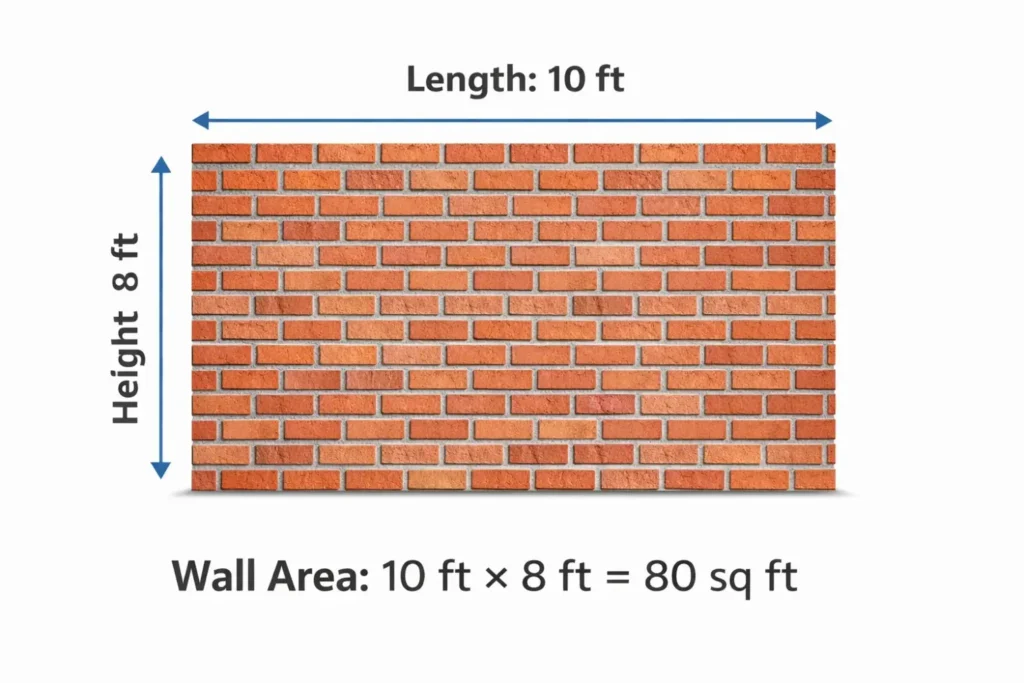
How to Measure Wall Length and Height
- Measure wall length from one end to the other edge
- Measure height from base to the top surface
- Keep measurements consistent in the same unit
Use a measuring tape and avoid guessing values.
Square Feet and Square Meter Calculation
- Multiply length by height to get total wall area
- Use square feet or square meters depending on your project
Examples:
- 10 ft × 8 ft wall = 80 square feet
- 3 m × 2 m wall = 6 square meters
This area becomes the foundation for estimating brick quantity.
Bricks Per Square Foot and Square Meter Reference
Quick reference values help when you need a fast estimate.
- Around 6 to 7 bricks are needed per square foot
- Around 60 to 65 bricks are needed per square meter
- These values include standard mortar joint spacing
- Actual numbers change with brick size and wall thickness
Use these as a starting point, not a final calculation. Always adjust based on your actual brick dimensions.
Step by Step Manual Brick Calculation Method
You can calculate bricks manually using a simple process. This method works for both small and large wall projects.
Step 1, Calculate Wall Area
- Multiply wall length by wall height
- This gives total surface area of the wall
Example:
- 12 ft × 8 ft wall = 96 square feet
Step 2, Calculate Brick Face Area
- Add mortar joint thickness to brick length and height
- Convert measurements into the same unit
- Multiply adjusted length and height
This gives area covered by one brick.
Step 3, Divide Wall Area by Brick Area
- Divide total wall area by one brick face area
- Result gives base brick quantity
This is the number without extra allowance.
Step 4, Add Wastage Percentage
- Add 5 to 10 percent extra bricks
- Covers breakage, cutting, and handling loss
- Always round up to the nearest whole number
This gives final usable brick quantity.
Wall Thickness and Its Impact on Brick Quantity
Wall thickness changes the total number of bricks required.
Single Wall vs Double Wall
- Single wall uses one layer of bricks
- Double wall uses two layers for extra strength
How Thickness Changes Brick Count
- Double wall almost doubles brick quantity
- Thicker walls increase material and labor requirements
- Structural walls usually require more thickness
Choose wall type based on purpose and design.
Role of Mortar Joint in Brick Calculation
Mortar joint is the space between bricks filled with cement mix. It plays a small but important role in accurate estimation.
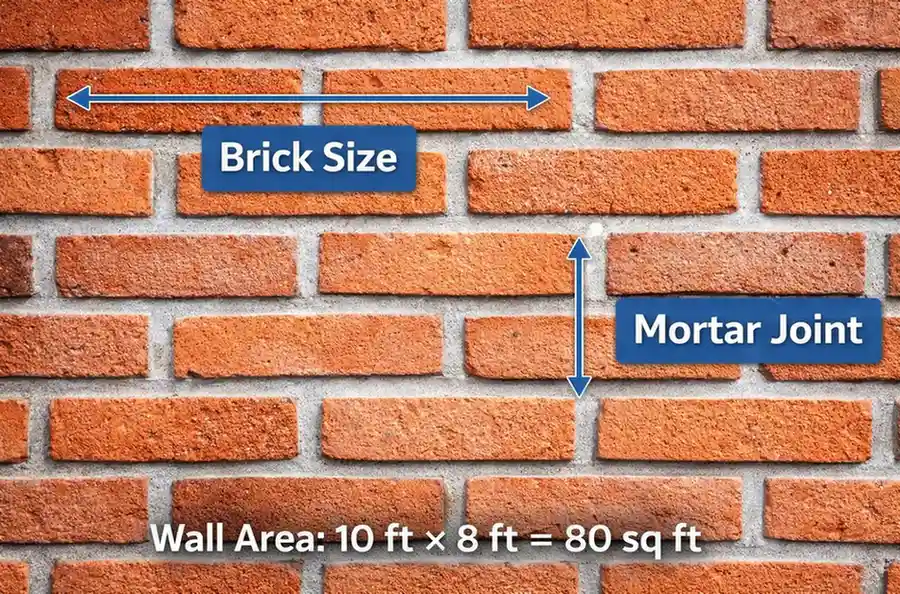
- Standard joint thickness is about 10 mm or 3/8 inch
- It increases the effective size of each brick
- Larger joints slightly reduce total brick count
- Smaller joints increase the number of bricks needed
Ignoring mortar spacing leads to wrong calculations. Always include it when estimating brick quantity.
Wastage and Extra Bricks Planning
Brick wastage happens in every construction project.
- Bricks break during transport and handling
- Cutting bricks for edges creates material loss
- Some bricks get damaged during installation
Add extra bricks to avoid delays:
- 5 percent for small projects
- 10 percent for larger or complex walls
Always round up your final number to stay safe.
Adjusting for Doors, Windows, and Openings
Many people forget this step, which leads to overestimation.
- Measure area of each door and window
- Subtract this area from total wall area
- Calculate bricks only for the remaining wall
Example:
- Total wall area = 100 sq ft
- Window area = 10 sq ft
- Actual area = 90 sq ft
This simple step saves both bricks and cost.
Brick Calculation Examples for Better Understanding
Examples help you apply the method quickly in real situations.
Example in Square Feet
- Wall size = 10 ft × 8 ft
- Total area = 80 square feet
- Multiply with average bricks per square foot
- Add wastage to get final estimate
Example in Square Meters
- Wall size = 3 m × 2 m
- Total area = 6 square meters
- Multiply with bricks per square meter
- Add extra bricks for wastage
These examples give a quick idea for planning.
Common Mistakes in Brick Quantity Estimation
Small mistakes can lead to major material issues on site.
- Ignoring mortar joint gives wrong brick quantity
- Using incorrect brick size creates inaccurate results
- Not adding wastage causes shortage during work
- Forgetting openings increases unnecessary material use
Always double check inputs before final calculation.
How to Use a Brick Calculator for Fast Results
A brick calculator helps you save time and avoid manual errors.
- Enter wall length and height in selected unit
- Choose standard brick size or enter custom dimensions
- Select wall type and wastage percentage
- Click calculate to get instant brick quantity
You can quickly adjust inputs and get updated results.
This is useful for large projects or repeated calculations.
When to Use Manual Method vs Calculator
Both methods have their own benefits depending on your need.
- Manual method helps you understand calculation basics
- Calculator gives faster results for large wall areas
- Use manual method for learning and small estimates
- Use calculator for accuracy and time saving
Combining both methods gives better confidence in results.
Brick Quantity Planning for Different Projects
Different projects require slightly different planning approaches.
House Wall Construction
- Requires accurate estimation to avoid shortage
- Double wall is often used for strength
- Plan extra bricks for corners and joints
Boundary Wall Projects
- Usually uses single wall thickness
- Add extra bricks for pillars and support sections
Small DIY Brick Projects
- Simple estimation works for garden walls or repairs
- Keep extra bricks for adjustments and mistakes
Brick Calculation vs Brick Cost Estimation
It is important to separate quantity and cost.
- Brick calculation focuses only on number of bricks
- Cost depends on price per brick and labor charges
- Mixing both creates confusion during planning
Use a separate cost method after calculating quantity.
Key Factors That Affect Brick Quantity Accuracy
Several factors can change your final estimate.
- Brick size variation between suppliers
- Mortar thickness differences in construction
- Wall design and pattern variations
- Measurement errors during planning
Careful measurement improves overall accuracy.
Quick Tips to Improve Brick Calculation Accuracy
Follow these tips to get better results.
- Always measure wall dimensions carefully
- Use the same unit for all inputs
- Confirm brick size before calculation
- Add extra bricks to avoid delays
Small checks make a big difference in planning.
Final Thoughts on Brick Calculation
Brick calculation becomes simple once you understand the basics. This brick calculator guide helps you plan better and avoid mistakes.
Accurate estimation saves cost and prevents material shortage. Use simple formulas or a calculator based on your project needs. Always round up your results for practical construction use.