

River Rock Calculator, How Much River Rock Do I Need
Estimate how much river rock you need for a rectangular landscape area.
Planning a project? Browse our full list of construction calculators here.
A river rock calculator helps you estimate how much decorative stone your project needs. It connects area, depth, rock size, and weight into one clear plan. Many people guess and end up short or overbuying. This guide keeps things simple and focused on real landscaping use.
You will learn how square feet, cubic yards, and tons work together. You will also see how river rock size and depth change your final amount. This makes ordering easier, whether you buy by yard, ton, or bags.
What Is River Rock and Where Is It Commonly Used
River rock in landscaping projects
River rock is a smooth, rounded decorative stone used in outdoor spaces. It comes in different sizes and colors, making it popular for design and drainage.
Common uses include:
- Garden beds and flower borders
- Walkways and side yards
- Dry creek beds and drainage paths
- Around pools and patios
It is often called landscape rock, decorative stone, or pebble in supplier listings.
Why homeowners choose river rock over mulch or gravel
River rock offers a clean and long-lasting finish compared to mulch or basic gravel.
Key reasons people choose it:
- Does not break down like mulch
- Improves drainage in wet areas
- Adds visual contrast to plants and soil
- Needs less maintenance over time
Gravel compacts more, while river rock stays more decorative and open.
Common places to install river rock
River rock works well in many parts of a yard.
Typical areas include:
- Around trees and shrubs
- Along house foundations
- Around pool edges
- In front yard design features
- In erosion control zones
Each area may need a slightly different depth and rock size.
How Much River Rock Do I Need
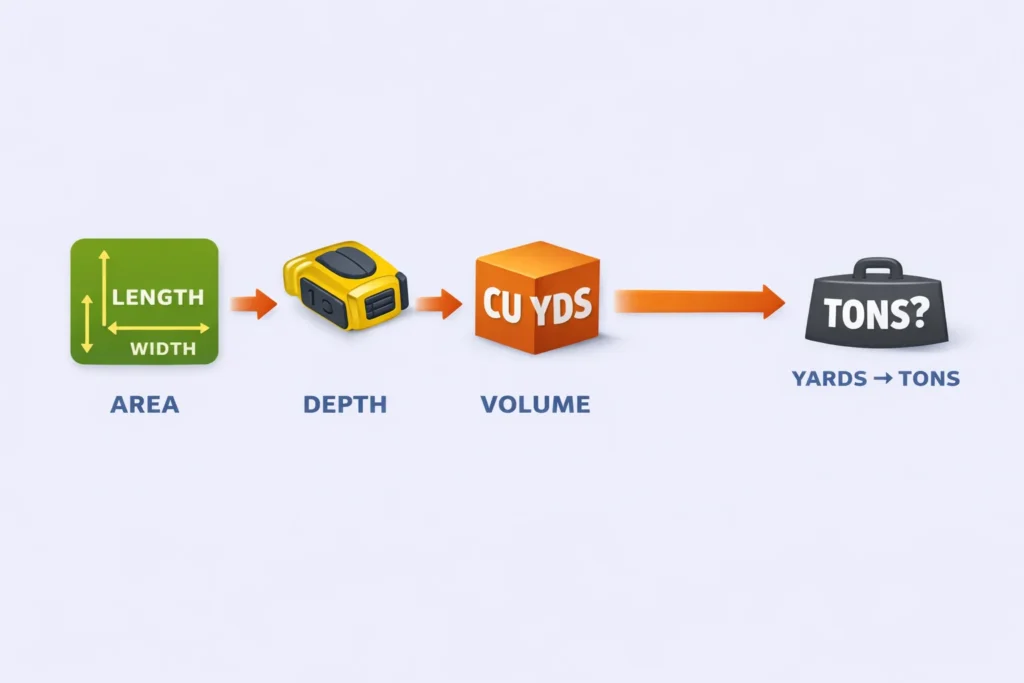
The three inputs that control your estimate
Every estimate depends on three simple values. Getting these right saves time and cost.
- Length of the area in feet
- Width of the area in feet
- Depth of the layer in inches
These inputs define your total coverage and material volume.
Why area and depth matter more than guesswork
Many people rely on visual guesses, which often leads to mistakes. Small changes in depth can increase the total amount quickly.
- A larger area increases total cubic feet and cubic yards
- A deeper layer increases volume and total weight
- Even one extra inch can add significant material
That is why measuring square feet and setting the right depth matters.
Why river rock size also changes the estimate
Rock size affects how material sits and covers the ground. This is often ignored, but it changes results.
- Smaller stones pack tighter and cover more evenly
- Larger stones create gaps and need more volume
- Weight per cubic yard can vary with stone size
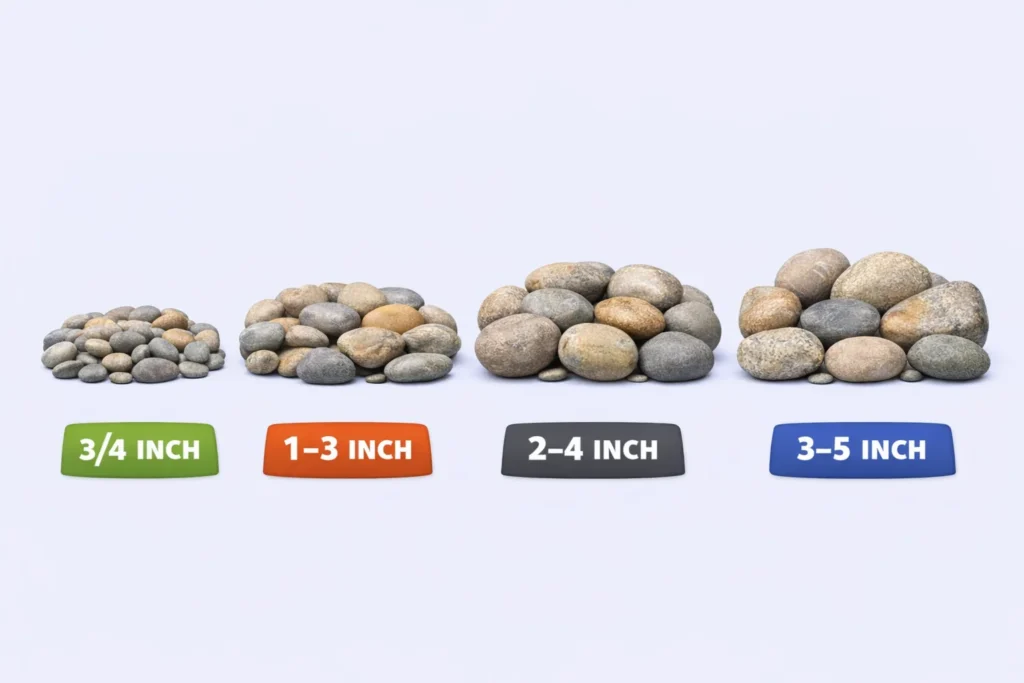
Common sizes include:
- 3/4 inch decorative stone
- 1 to 3 inch river rock
- 2 inch and larger landscape rock
Choosing the correct size helps match both look and quantity.
River Rock Coverage Basics for Square Feet
River rock coverage depends on area, depth, and stone size. Most people think one yard covers a fixed space, but that is not accurate. Coverage changes based on how thick you spread the material.
How square footage is measured for landscaping
Start by calculating the total area in square feet. This keeps your estimate grounded.
- Measure length and width in feet
- Multiply both values to get total area
- Example, 20 ft × 10 ft = 200 square feet
This number becomes the base for all further calculations.
How depth affects river rock coverage
Depth controls how much stone you actually need. Even small changes affect cubic yards and tons.
- Light coverage uses around 1.5 inches
- Standard coverage uses around 2 inches
- Heavy coverage uses around 3 inches
A thicker layer reduces visible soil and gives a stronger finish. It also increases total material needed.
How many square feet river rock can cover
There is no fixed answer for coverage per yard. It depends on both depth and rock size.
- At 2 inches depth, one cubic yard covers a moderate area
- At 3 inches depth, the same yard covers less space
- Larger stones may reduce effective coverage
This is why square feet, depth, and volume must always be calculated together. Skipping one of these leads to inaccurate estimates.
River Rock Calculator by Size
Rock size changes how river rock covers the ground and how much you need. Many buyers ignore this and rely on one fixed estimate. That often leads to shortages or extra material.
3/4 inch river rock calculator intent
Smaller stones give a smoother and more compact finish. They sit closer together and reduce visible gaps.
- Works well for decorative beds and pathways
- Covers more evenly at lower depth
- Often used where a clean surface is needed
This size can reduce the total cubic yards slightly due to tighter packing.
1 to 3 river rock calculator intent
This is the most common size range used in landscaping projects. It balances coverage and visual appeal.
- Ideal for garden beds and borders
- Good mix of coverage and texture
- Works for most residential outdoor areas
Most suppliers label this as standard river rock, so it fits common buying needs.
2 inch river rock calculator intent
Medium-sized stones create a more visible texture in the landscape. They are often chosen for design impact.
- Good for decorative ground cover
- Creates a more natural look
- Needs proper depth to avoid patchy coverage
This size may require slightly more volume compared to smaller stone.
3 to 5 river rock calculator intent
Larger stones stand out more and are used for bold landscaping features. They are less about full coverage and more about appearance.
- Used in dry creek beds and feature areas
- Leaves more gaps between stones
- Often paired with deeper layers
This size usually increases both cubic yard and ton estimates.
How size affects cubic yard and ton estimates
Stone size directly affects weight and packing behavior. Two projects with the same area and depth can still need different amounts.
- Smaller stone packs tighter, often more efficient
- Larger stone creates voids and needs more material
- Density changes slightly based on rock type
That is why choosing the correct size before calculating is important.
River Rock Depth for Better Coverage Planning
Depth controls how your finished area looks and how much material you need. Many people choose depth based on guesswork, which often leads to uneven results. A clear plan helps you avoid patchy coverage and extra cost.
1.5 inch depth for light decorative coverage
This is a thin layer used mainly for visual improvement. It works best where the base surface is already clean.
- Good for topping existing beds
- Works in low-traffic decorative areas
- Uses less material compared to deeper layers
It may not fully hide soil or weeds if the base is uneven.
2 inch depth for standard river rock coverage
This is the most common choice for landscaping projects. It balances coverage, cost, and appearance.
- Ideal for most garden beds and borders
- Covers soil more evenly
- Helps maintain a clean and finished look
This depth works well with common sizes like 1 to 3 inch river rock.
3 inch depth for heavier coverage
A thicker layer gives stronger visual impact and better coverage. It is useful when you want a bold finish.
- Hides soil and base material more effectively
- Works well with larger stone sizes
- Adds weight and stability to the surface
This option increases total cubic yards and tons.
When deeper coverage makes sense
Some areas need more than standard depth. This depends on ground condition and project goals.
- Uneven ground that needs better coverage
- High-visibility areas where appearance matters
- Spaces with weed barrier underneath
- Drainage or erosion control zones
Choosing the right depth early helps you plan both quantity and cost accurately.
River Rock Calculator in Cubic Yards
Cubic yards are the most common unit used when buying bulk river rock. Most landscape suppliers quote and deliver material in yards, not square feet. Understanding this unit helps you place accurate orders.
For better volume estimation, check our cubic yard calculator to understand total material required.
Why cubic yards matter when buying bulk material
Bulk landscape rock is almost always sold by the cubic yard. This keeps pricing simple for larger projects.
- One cubic yard equals 27 cubic feet
- Delivery trucks are often measured in yard capacity
- Supplier quotes are usually based on yard quantity
This makes cubic yards the key unit for planning medium and large areas.
How cubic yards are calculated from area and depth
The calculation connects square feet with depth. It converts surface area into volume.
- Multiply length and width to get square feet
- Convert depth from inches to feet
- Multiply area by depth to get cubic feet
- Divide by 27 to get cubic yards
This simple flow keeps your estimate accurate and consistent.
When cubic yards are more useful than bags
Cubic yards work best when the project size increases. Smaller projects may still use bags, but larger ones benefit from bulk.
- Better for full yard landscaping projects
- Useful for multiple beds and pathways
- Reduces cost compared to bagged stone
Using cubic yards helps match supplier pricing and delivery planning.
River Rock Calculator in Tons
Many suppliers price river rock by weight instead of volume. That is why understanding tons helps you compare quotes and plan delivery better. Volume tells you space, but weight tells you how much material you are actually buying.
Why some suppliers sell river rock by the ton
Weight-based pricing is common in stone yards and bulk suppliers. It makes transport and loading easier to manage.
- Trucks are often loaded by weight limits
- Pricing per ton is easier for suppliers to standardize
- Larger rock sizes are easier to measure by weight
This is why you may see prices listed per ton instead of per yard.
River rock tons versus cubic yards
Cubic yards and tons are connected, but they are not the same. The conversion depends on density and rock size.
- Smaller stones are slightly heavier per yard
- Larger stones may have lower packing density
- A common range is about 1.3 to 1.5 tons per cubic yard
This variation means you should not rely on one fixed conversion for every project.
When to check both yards and tons
Checking both units helps you avoid confusion when ordering. Different suppliers may use different systems.
- When comparing quotes from multiple suppliers
- When delivery is based on truck weight
- When planning cost and total load size
Using both cubic yards and tons gives a clearer picture of your total material.
River Rock Cost Calculator Factors
Cost depends on more than just how much material you need. Price can change based on size, supplier, and delivery. Planning this early helps you avoid surprises.
What changes river rock price the most
Several factors directly affect total cost. These vary from one location to another.
- Rock size and type
- Local supplier pricing
- Distance from quarry or yard
- Total quantity ordered
Larger decorative stone often costs more than smaller options.
Cost per ton versus cost per cubic yard
Suppliers may list prices in different units. Understanding both helps you compare correctly.
- Price per ton is common for bulk stone yards
- Price per cubic yard is common for landscape supply stores
- Always convert to the same unit before comparing
This avoids confusion when reviewing multiple quotes.
Hidden costs buyers often miss
Some costs are not included in basic material pricing. These can increase your total budget.
- Delivery charges based on distance
- Minimum order requirements
- Extra material for uneven ground
- Waste allowance for coverage gaps
Ignoring these can lead to underestimating the project cost.
How to estimate total river rock cost before ordering
A simple approach helps you stay within budget.
- Calculate total cubic yards or tons needed
- Multiply by supplier price per unit
- Add delivery and extra material allowance
- Review final estimate before placing the order
This gives a more realistic total for your landscaping project.
River Rock for Landscaping Projects
River rock fits many outdoor projects where both function and appearance matter. Choosing the right size and depth depends on how the space will be used.
River rock for flower beds and borders
Flower beds are one of the most common uses for decorative stone. They create a clean and defined edge.
- Helps separate plants from lawn areas
- Reduces soil splash during watering or rain
- Works well with 1 to 3 inch river rock
This setup gives a balanced look without needing too much depth.
River rock around a pool
Pool areas need materials that handle water and still look clean. River rock is often chosen for this reason.
- Improves drainage around wet areas
- Adds contrast to concrete or tiles
- Larger stones may feel rough under bare feet
Depth and size should be selected based on comfort and appearance.
River rock for dry creek beds and drainage
Dry creek beds use river rock to guide water flow. They also add a natural landscape feature.
- Helps manage runoff during heavy rain
- Works well with larger stone sizes
- Often combined with deeper layers
This use focuses on both function and visual design.
River rock around foundations and side yards
These areas often need low maintenance coverage. River rock provides a durable solution.
- Reduces mud and water splash near walls
- Keeps the area clean and stable
- Works well for narrow or long spaces
It is a practical option for areas that do not need planting.
How to Measure an Area Before Ordering River Rock
Accurate measurement is the base of a good estimate. Small mistakes in area can lead to large errors in cubic yards and tons.
To measure your space accurately, you can use our square footage calculator before estimating river rock.
Measuring rectangular areas
Most landscaping spaces follow a simple rectangular shape. This makes measuring quick and reliable.
- Measure length in feet
- Measure width in feet
- Multiply both values to get square footage
This method works well for beds, borders, and straight pathways.
Measuring circular areas
Some spaces are round, like around trees or patios. These need a different approach.
- Measure the radius from center to edge
- Use a simple circle formula to estimate area
- Keep values in feet for consistency
This helps you plan coverage for curved designs.
Measuring irregular landscaping spaces
Not all areas are uniform. Irregular shapes need to be broken down.
- Divide the area into smaller rectangles or sections
- Measure each section separately
- Add all sections together for total area
This keeps your estimate more accurate than guessing.
Why measuring carefully saves money
Precise measurements reduce waste and improve planning. It also helps when ordering from suppliers.
- Avoids buying too much material
- Prevents running short during installation
- Helps match delivery quantity with actual need
A few extra minutes measuring can save both time and cost.
River Rock Coverage Chart Ideas Users Usually Look For
Many users search for quick coverage answers instead of full calculations. A simple reference helps them understand how area, depth, and size connect. This also supports better planning before using a river rock calculator.
Coverage by common depth levels
Depth changes how far one cubic yard can spread. Thinner layers cover more area, while thicker layers reduce coverage.
- Around 1.5 inches covers a larger surface area
- Around 2 inches gives balanced coverage for most projects
- Around 3 inches reduces coverage but improves appearance
This helps users decide how thick the layer should be.
Coverage by popular rock sizes
Stone size affects how material spreads across the ground. Larger stones create gaps, while smaller ones sit tighter.
- 3/4 inch stone covers more evenly
- 1 to 3 inch river rock offers balanced coverage
- 2 to 4 inch stone creates a more textured surface
- 3 to 5 inch rock is more decorative than compact
Size choice changes both coverage and total material needed.
Coverage by cubic yard and by ton
Many users compare yards and tons when planning purchases. A simple view of both units reduces confusion.
- Cubic yards show how much space the material fills
- Tons show how much weight you will order
- Conversion depends on density and rock size
Looking at both together gives a clearer estimate before ordering.
River Rock vs Gravel for Decorative Ground Cover
River rock and gravel are often compared, but they serve different purposes. Understanding the difference helps you choose the right material for your project.
Shape and appearance differences
The shape of the stone changes how the finished area looks. This is one of the biggest differences.
- River rock is smooth and rounded
- Gravel is more angular and rough
- River rock gives a softer, decorative finish
This makes river rock better for visible landscape areas.
Coverage and project feel
Each material behaves differently when spread on the ground. This affects both coverage and comfort.
- River rock sits loosely and creates visible gaps
- Gravel compacts more tightly under pressure
- River rock feels more natural in garden settings
These differences affect how much material you may need.
When river rock is the better fit
River rock works best when appearance matters along with function.
- Decorative beds and borders
- Around pools and patios
- Front yard landscaping features
- Low-maintenance ground cover
It is not always the cheapest option, but it offers a stronger visual impact.
If you are comparing materials, our gravel calculator can help estimate similar projects easily.
Common River Rock Mistakes That Change the Estimate
Small mistakes can change your total material by a large amount. Most issues come from skipping measurements or using the wrong assumptions.
Using the wrong depth
Depth has a direct impact on cubic yards and tons. Choosing the wrong value leads to poor results.
- Thin layers may look patchy after installation
- Thick layers increase cost faster than expected
- Depth should match both design and function
A small change in inches can shift the entire estimate.
Ignoring rock size differences
Not all river rock behaves the same. Size affects packing and coverage.
- Smaller stones fill gaps more efficiently
- Larger stones need more volume to cover the same area
- One standard estimate does not fit every size
Always match the estimate with the selected stone size.
Forgetting a waste factor
Material loss happens during transport and installation. Ignoring this leads to shortages.
- Uneven ground may need extra material
- Some rock settles after placement
- Small gaps can reduce final coverage
Adding a small extra amount helps avoid delays.
Ordering only by visual guess
Guessing often leads to incorrect quantities. It may seem quick, but it creates problems later.
- Visual estimates ignore depth and area
- Shortage can stop the project mid-way
- Extra orders increase cost and delivery time
Using proper measurements gives better control over the project.
How to Use a River Rock Calculator Correctly
Using a river rock calculator is simple when you follow the right steps. The goal is to match your measurements with the correct depth and rock size.
Enter the space dimensions carefully
Accurate inputs lead to accurate results. Always use real measurements instead of rough estimates.
- Measure length and width in feet
- Avoid mixing units during entry
- Double-check values before calculating
This keeps your square footage reliable.
Choose the right depth for the project
Depth should match how you want the area to look. It also affects total volume.
- Use lighter depth for decorative topping
- Use standard depth for most landscape areas
- Use heavier depth for strong coverage
Picking the right depth avoids rework later.
Select the closest river rock size
Rock size should match what the supplier offers. This keeps your estimate practical.
- Choose size based on product label
- Match with your design preference
- Consider how size affects coverage
This step improves both yard and ton accuracy.
Review results before placing an order
Take a moment to check all values before buying material.
- Look at square feet, cubic yards, and tons together
- Compare with supplier pricing units
- Adjust depth if needed for better coverage
A quick review helps prevent ordering mistakes.
When a Small Project Needs Bags Instead of Bulk River Rock
Not every project needs bulk delivery. Smaller areas are often easier to handle with bags. Choosing the right option saves time and money.
When bagged river rock makes more sense
Bags work well for limited spaces and simple jobs. They are easier to carry and control.
- Small garden beds or planters
- Narrow borders along paths
- Touch-up areas or repairs
- Projects with limited access
This option avoids large deliveries for small needs.
When bulk delivery is the better option
Bulk material becomes more practical as project size grows. It reduces cost per unit.
- Larger square footage areas
- Multiple landscape sections
- Full yard coverage projects
- Drainage or erosion control zones
Bulk delivery is usually more cost-effective for bigger jobs.
Why this choice affects final cost
The pricing difference between bags and bulk can be significant. Understanding this helps with budgeting.
- Bagged stone often costs more per unit
- Bulk orders reduce price per cubic yard or ton
- Delivery fees may apply for large quantities
Choosing the right format keeps your project within budget.
River Rock Ordering Tips Before Delivery Day
Planning before delivery helps avoid delays and extra costs. A few checks can make the process smooth.
Confirm how the supplier prices the material
Different suppliers use different units for pricing. Knowing this avoids confusion.
- Ask if pricing is per cubic yard or per ton
- Check minimum order requirements
- Confirm if tax or fees are included
This helps you compare quotes correctly.
Ask about rock size and density assumptions
Product labels can vary between suppliers. Size and density affect your estimate.
- Confirm the actual size range of the stone
- Ask how they convert yards to tons
- Check if the material matches your selected type
This ensures your order matches your plan.
Plan the drop-off area in advance
Delivery requires enough space and access. Preparing the site avoids last-minute issues.
- Clear a space for unloading
- Protect surfaces like driveways if needed
- Make sure trucks can access the area easily
This helps avoid delays during delivery.
Frequently Asked Questions
Final Buying Checklist Before You Calculate
Check these before using a river rock calculator
Having the right details makes your estimate more accurate.
- Measured length and width
- Selected rock size
- Chosen depth
- Supplier pricing unit
- Delivery access and space
This ensures you are ready before calculating.
What the best estimate should tell you
A complete estimate gives more than one value. It connects all key factors.
- Total square feet covered
- Cubic yards required
- Estimated tons for delivery
- Expected material cost
These values help you plan and order with confidence.
Why a River Rock Calculator Helps You Order Better
A river rock calculator brings everything together in one place. It connects area, depth, size, and weight into a clear estimate. This reduces guesswork and improves planning.
It helps you compare supplier pricing, avoid shortages, and control project cost. Whether you are working on a small bed or a full yard, the right estimate makes the process smoother.